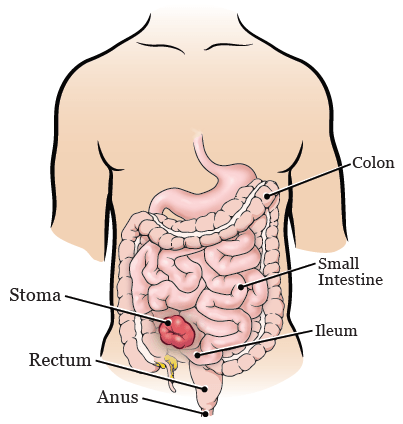
An ileostomy is an opening in the belly to reroute the passage of wastes away from the colon. You may need it if a part of your colon or ileum stops working properly. That may be due to an underlying condition or an injury. Sometimes, the surgeon may find out that removing the colon is the only way to save your life or end a chronic condition. That surgical procedure usually ends up in an ileostomy.
An ileostomy can be permanent or temporary, depending on the underlying condition. If it is a temporary ileostomy, you will have to live with it for a few weeks to a few months. While having a permanent ileostomy, you have to live with an ostomy bag on your front for the rest of your life.
Before surgery, an ostomy nurse will mark the site of the stoma. He or she will work with your surgeon throughout the process.
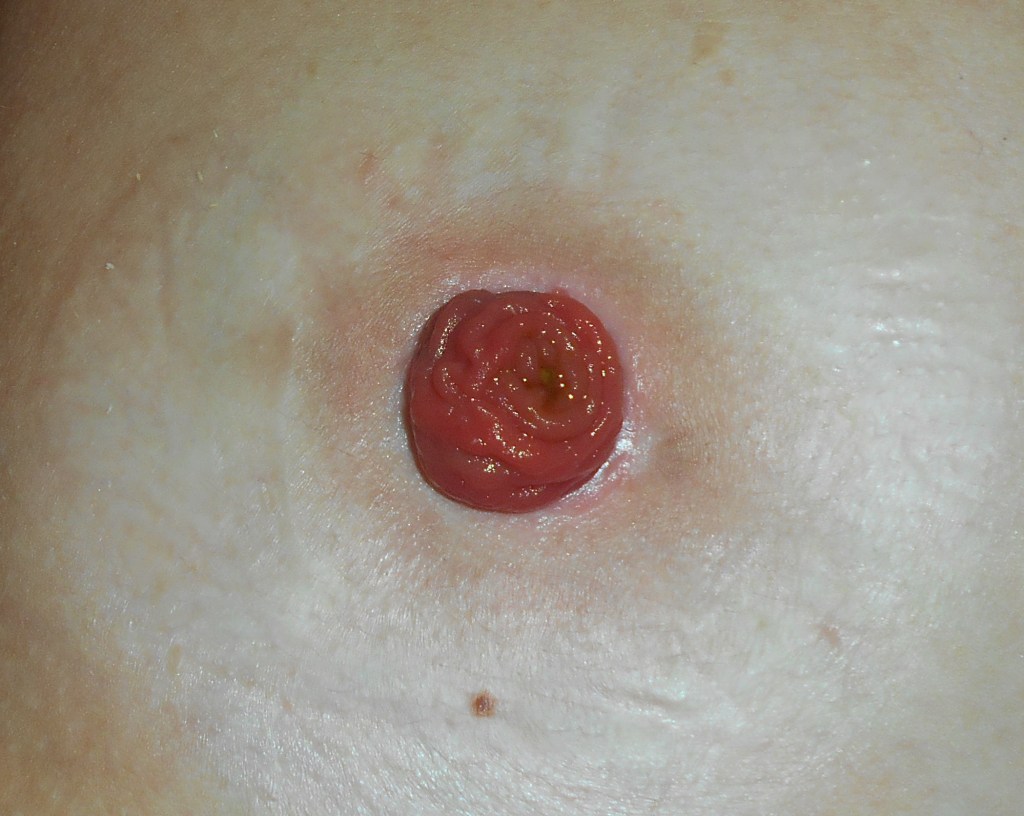
A stoma is a part of the intestine sticking out on your belly. Its mucous membrane makes it look pretty much like the inside of the mouth. A stoma is generally red or pink. It secretes a small amount of mucus the entire time. After surgery, a stoma has a lot of swelling, which subsides over time. it generally takes six weeks for a stoma to settle to permanent shape and size.
A stoma doesn’t have any sphincter muscles, meaning that you won’t have any control over when to move your bowels. There are also no nerve endings in the stoma. That means the stoma itself is not a source of any pain.
During ileostomy surgery, the colon, also known as the large intestine, is removed. Sometimes, the rectum remains intact. In severe cases, the surgeon may remove the rectum as well.
What does an ileostomy do?
Fecal wastes do not pass out through the anus after your surgeon removes or rests the colon and rectum. All those wastes will now leave your body through the stoma. You will have to wear an ostomy bag over the stoma to manage those stool evacuations.
Fecal materials passing out of an ileostomy are usually liquid to pasty. That, however, largely depends on what you eat. Your medications and other lifestyle choices also play a significant role in this regard.
Caring for an ileostomy
An ileostomy produces liquid or pasty stools that are loaded with digestive enzymes, salts, and electrolytes. These unused nutrients and minerals can be highly corrosive to the abdominal skin. That is why it is quite crucial to make sure that no stomal output comes in contact with the abdominal skin. For that, you will have to ensure a tighter seal between the ostomy pouch and the peristomal skin. The side of the ostomy pouch’s skin barrier that goes against the abdominal skin is laden with a strong adhesive. That allows for a securer attachment of the ostomy pouch over the stoma.
While attaching the ostomy pouch, make sure that there are no creases in the skin barrier that could allow for the seepage of the stomal output. You can learn how to attach an ostomy pouch from an ostomy care nurse.

 J-Pouch Health