Airplane piolet with an ostomy bag

When I was growing up, I always had a fascination with airplanes. I did not understand how a big metal object would float in the sky as they do. My parents answered all the questions I had regarding planes. I loved to learn about and take in all the information regarding the subject. My father told me one day that if I truly had a passion for planes and wanted to fly, I could become a pilot for commercial flying. When I found this out, I knew I was going to be a pilot no matter what, even when I had developed an illness in my colon and had to get an ostomy bag. 

As I grew up, I had a love of planes, and I knew that no matter what happened, I would eventually be a pilot. When I was about to graduate high school and go to school for pilots, I developed a disease that caused my colon to cease to work. The first sign I had of it was a significant amount of constipation. I told my parents about it after a week of this problem, so they scheduled me for a doctor’s appointment. When I got there, I had to fill out some paperwork. Once I turned it in, I was called back to a room. The doctor came in, and I began telling her about what has been happening. Once I was done telling him the problem, he said I might have a disease destroying my colon, and I would need an ostomy procedure to fix it. 

Once the procedure was done, I felt defeated. After a few days in the hospital, my mom came in with a letter. I opened it with some excitement. It was a letter providing me with a scholarship to pilot school. I think my heart stopped for a moment. I was sure to reply to them as soon as I got home and accepted their offer. Four years later, I got a job at the nearby airport flying the big seven forty seven charter planes. 
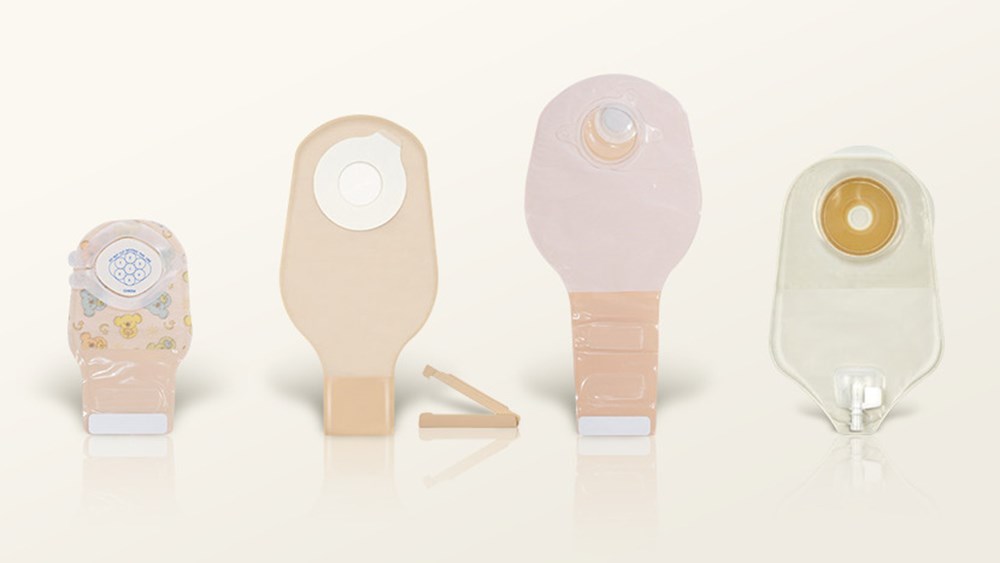
Having an ostomy as a pilot is not all that bad. I can easily do my job, and I do not need to worry about going to the bathroom. I love being a pilot. I get to travel the world and meet new people as well as learn about new cultures. Being a pilot has been a dream of mine, and I’m so glad to be where I am today. With my ostomy bag, it restricts my movement a bit, but I do not notice it while I’m flying. I only really notice it when I need to do a big stretch, grab or pull the levers. I hope to keep flying. The pay is pretty nice, nothing to complain about, really. 
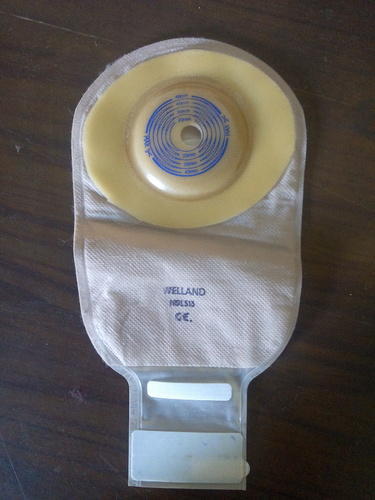
I am glad to be a pilot, and thank goodness my parents told me I could become one. I love being a pilot. Being able to see the world is amazing but not as amazing as just being able to fly planes. Ever since I was a little kid, I had a passion for flying, and I am glad to have been able to turn that passion into a career. Getting the ostomy procedure did put a damper on my life, but after getting that letter from college, my life changed for the better. 
Actor with ostomy

As an actor who has gotten a colostomy procedure life has been easy for the most part. I have always had a passion for acting when I was growing up. I enjoyed pretending to be someone else, it was fun to me. After my procedure, I needed something fun like that to keep me distracted. When I found out I could act for a career I knew nothing would stop me from doing that, it became my dream, my obsession. 

When I was in high school as a freshman I developed a lot of bad indigestion. I went to see the doctor about it and after a diet change, he said it should get better. After about a month and no results in a differing outcome, I went back to see my doctor. When I told him there was no change in indigestion I would have after eating he wanted to get a scan to see if he could see anything going on inside. He determined a CAT scan would be the best. After the scan, he told me that a large section of my large intestine has died off riding it useless. This is what was causing my horrid indigestion issues. My doctor determined that a colostomy procedure would be the best route to take from here to ensure this does not continue and I do not have any more problems. 

After my procedure, he told me that I could continue to do as I wished however no contact sports. I reassured him that that would not be a problem as I loved acting. He told me that I could continue to do that and he would be looking for me in the movies. I chuckled as I was only a freshman in acting classes. When I got back to school I made a promise to myself that I would do every play we did to hone my acting skills because of my current situation I did not believe I could make it unless I had enough talent. In my acting classes, I made sure to take in as much information as possible. When the first play came I was ecstatic. I went in for my audition and gave it my all. They told me it was the best they had seen in their whole time doing this. As my high school years went on I got every part in every play

I got spotted by someone in the high school on my last play and he offered me an acting job in an upcoming movie he was directing. I was thrilled. I did the best I could and the movie ended up mankind double the amount we put in on it. That movie got me noticed by some big-time directors who asked me to be in their movies, I even got the chance to work alongside some of the cast from the Marvel movies. I had always looked up to Robert Downey Jr and when I had the chance to work with him I almost fainted. 

If I had not gotten my breakthrough after high school then I’m not sure if I would be in the big movies that I am today. My ostomy bag never really came up in conversations nor was it ever a problem if it had come up. I enjoyed the high school acting and at times I look back on it. I am glad to have gotten my ostomy procedure because it drove me to be a better actor. I have never had any problems with my ostomy bag and it has never caused me to not get a job. I’m thrilled to have gotten my breakthrough. 

Cross country runner with an ostomy

When I was growing up, I loved to run; I’m not sure why. Everyone I talked to said they did not like running. My friends and parents would encourage me to keep doing what I enjoyed doing regardless of what others may say or think. I had a pretty bad accident when I was growing up, and I thought it would be the end of my ability to run. When I did learn that I could run as a sport in school, I was ecstatic and knew that was what I wanted to do. 

Growing up, I spent a great deal of time running. It was quite a relaxing activity, as surprising as it may sound. I loved to run. My parents supported me and encouraged me to keep doing it as kids my age like to spend time inside. The exercise was good to have. Before I could get into high school, I got in a bad accident. My father and I were out for a run on a mountainside. We have run this trail many times before. Today was a little different from what I was used to, however. It had rained the night before, and the ground was caked with mud. I took a wrong step and slipped to the ground. I fell forward; before I could catch myself, I realized I was falling down the side of the mountain. It was not a steep incline but enough to get some speed going. I came to an abrupt stop wrapped around a tree. I passed out to hearing my dad yelling done at me.

When I woke up, I was in the hospital with a concussion and a sprained ankle, along with some internal damage. The doctor told me that I had a large intestine rupture and needed a colostomy procedure to help aid this. If I did not get the procedure, I would have bowel movement problems. After talking with my parents, we decided that it would be best to do what the doctor told me to do. Following my procedure, I asked the doctor if I could still run, and with a smile, he told me yes. I was so relieved about that because the high school I was going to had a cross country team I was going to join. When school started, I joined the team, and the first practice was a week later.

For practice, we ran a few miles. I was done roughly ten minutes before the next person showed. The coach and I had a good chat in those ten minutes, and I confided in him that I have an ostomy bad. He was so surprised about the fact that I was able to not only finish first but do it with an ostomy bag. I went on to win many cross country meets for the school in my high school time. I loved to run, and the winning was a plus. 

As a child, I loved to run. It was very relaxing to me, and anytime I told someone that I did it for fun, they would always make a face. It was funny to me to see that. I am glad to have had the support of my family and friends. Without them, I’m not sure if I would have been a runner in school. This opened some doors for me, and I was approached by a recruiter who offered me a full-ride scholarship to the school he was representing; I, of course, said yes. I am looking forward to running more in college and further on. 

What Is An Ileostomy?

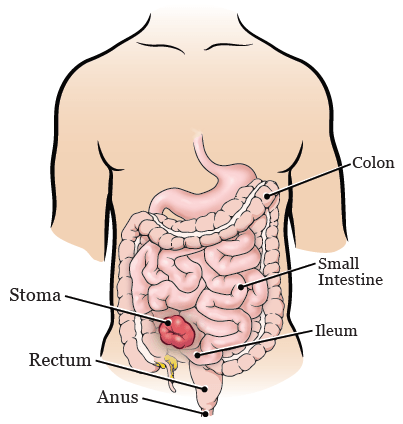
An ileostomy is an opening in the belly to reroute the passage of wastes away from the colon. You may need it if a part of your colon or ileum stops working properly. That may be due to an underlying condition or an injury. Sometimes, the surgeon may find out that removing the colon is the only way to save your life or end a chronic condition. That surgical procedure usually ends up in an ileostomy.

An ileostomy can be permanent or temporary, depending on the underlying condition. If it is a temporary ileostomy, you will have to live with it for a few weeks to a few months. While having a permanent ileostomy, you have to live with an ostomy bag on your front for the rest of your life.

Before surgery, an ostomy nurse will mark the site of the stoma. He or she will work with your surgeon throughout the process.

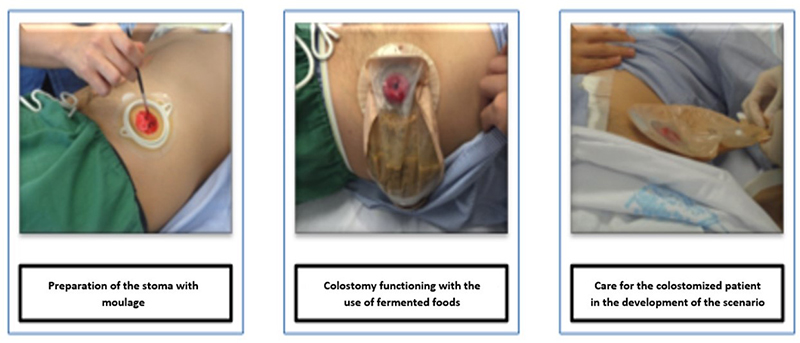
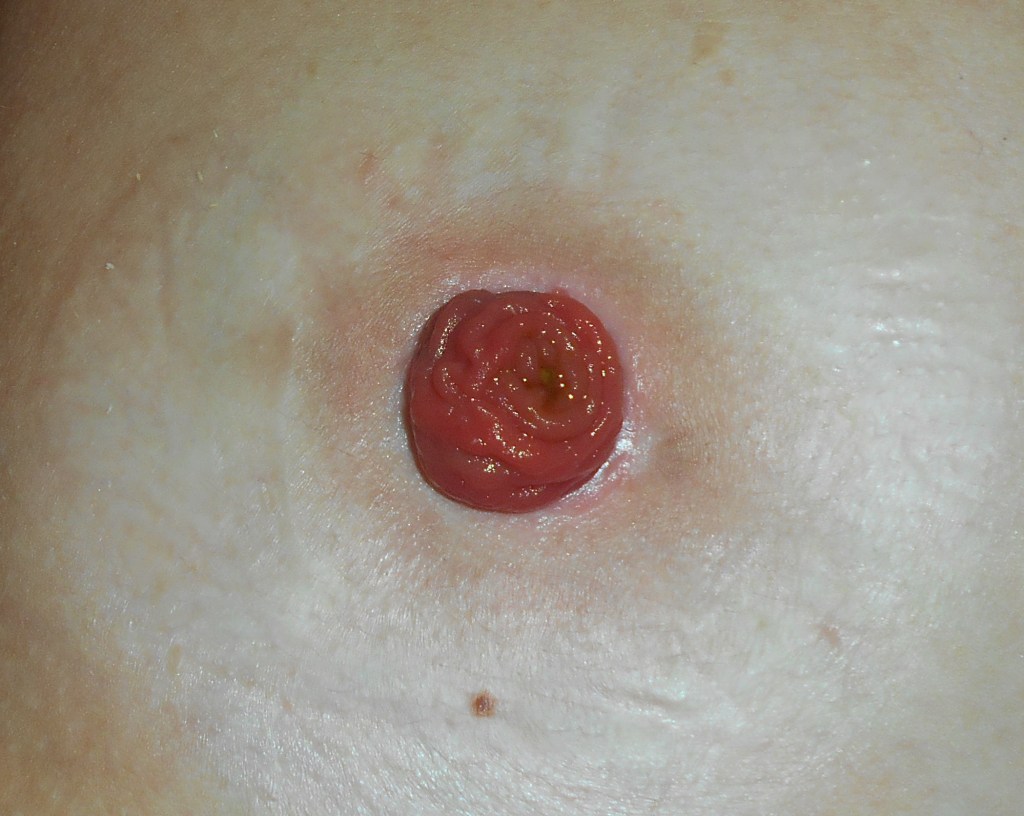
A stoma is a part of the intestine sticking out on your belly. Its mucous membrane makes it look pretty much like the inside of the mouth. A stoma is generally red or pink. It secretes a small amount of mucus the entire time. After surgery, a stoma has a lot of swelling, which subsides over time. it generally takes six weeks for a stoma to settle to permanent shape and size.

A stoma doesn’t have any sphincter muscles, meaning that you won’t have any control over when to move your bowels. There are also no nerve endings in the stoma. That means the stoma itself is not a source of any pain.

During ileostomy surgery, the colon, also known as the large intestine, is removed. Sometimes, the rectum remains intact. In severe cases, the surgeon may remove the rectum as well.

What does an ileostomy do?

Fecal wastes do not pass out through the anus after your surgeon removes or rests the colon and rectum. All those wastes will now leave your body through the stoma. You will have to wear an ostomy bag over the stoma to manage those stool evacuations.

Fecal materials passing out of an ileostomy are usually liquid to pasty. That, however, largely depends on what you eat. Your medications and other lifestyle choices also play a significant role in this regard.

Caring for an ileostomy

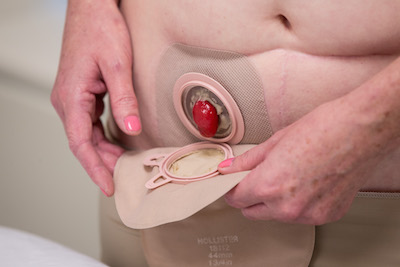
An ileostomy produces liquid or pasty stools that are loaded with digestive enzymes, salts, and electrolytes. These unused nutrients and minerals can be highly corrosive to the abdominal skin. That is why it is quite crucial to make sure that no stomal output comes in contact with the abdominal skin. For that, you will have to ensure a tighter seal between the ostomy pouch and the peristomal skin. The side of the ostomy pouch’s skin barrier that goes against the abdominal skin is laden with a strong adhesive. That allows for a securer attachment of the ostomy pouch over the stoma.

While attaching the ostomy pouch, make sure that there are no creases in the skin barrier that could allow for the seepage of the stomal output. You can learn how to attach an ostomy pouch from an ostomy care nurse.

How To Deal With Ostomy Pouch Leaks

Leakage is the biggest reason people hate ostomies. Reducing the instances of ostomy leakage takes the trial-and-error approach. After surgery, the size and shape of the stoma change a lot before settling to a permanent form.

If you want to reduce leakages, the best approach is to look for the root cause. In many cases, pancaking is the culprit causing those leaks. In several cases, stool gets under the skin barrier, compromising the seal between the ostomy pouch and the peristomal skin.

You can brainstorm to find the most appropriate solution for your leakage problem. You can also ask other people with ostomies to know what helped them fix their problems.

First off, you have to make sure that you are using the correct wafer for your stoma and body. If your wafer is not right for your body type, you will experience leakage. For instance, if your stoma seems sunk inside the abdominal skin, you will not benefit from a flat skin barrier. You can use a convex wafer to push your skin gently. It will allow the stoma to protrude a bit, reducing the chances of leakage. Remember, which wafer suits you best depends entirely on your body type. What works for you may not do the same for another person with an ostomy.

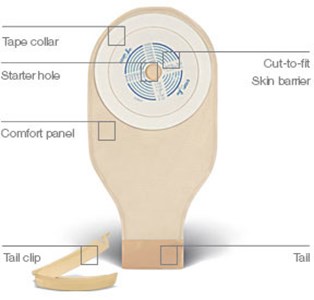
After choosing the correct type of wafer, you have to make sure that its opening fits your stoma nicely. If you are using a cut-to-fit skin barrier, you have to make sure that it allows an active stoma. If the water is too tight around the stoma, the stool will get under it and compromise the seal. A too-small opening of the skin barrier can strangle the stoma, causing several other severe issues. A too-large opening, on the other hand, will result in the skin around the stoma getting exposed to the stomal output. It can lead to skin irritation. If your stoma is regular-shaped, you can use a pre-cut wafer, which comes with a premade opening. You can choose from different sizes of pre-cut skin barriers, depending on the size and shape of your stoma.

Another way to prevent leaks is to take care of your peristomal skin. Peristomal skin, with its integrity taken care of, allows for a better seal. Healthy peristomal skin looks the same as any other part of the skin on the abdomen. If you experience leakage, it is best to take care of it immediately. It will allow you to keep your peristomal skin in good health. It also includes emptying or changing your ostomy pouch before it overfills. A heavy ostomy pouch can pull the skin barrier, causing it to develop gaps that can allow the stomal output to leak through.

Make sure to be gentle when peeling your wafer. Ripping the wafer off the peristomal skin quickly can be detrimental to your skin integrity. If your wafer has a strong adhesive, use adhesive remover while removing the ostomy appliance. It will help retain your skin’s integrity and will help prevent leakage in the long term.